
Have you ever finished a long day at work only to realize that your neck feels stiff, your shoulders feel tight, and your entire body seems exhausted? Perhaps you have spent hours sitting at a desk, looking at a computer screen, answering emails, or managing a demanding schedule. Even after leaving work, you may find it difficult to relax because the tension seems to follow you home.
If this sounds familiar, you are not alone. Many Americans experience neck and shoulder tension as part of their daily routines. Long hours at a desk, frequent smartphone use, poor posture, and ongoing work-related stress can all contribute to muscle tightness and physical discomfort.
While these symptoms can have different causes, taking time to relax and care for your body may help you feel more comfortable. A professional neck and shoulder massage is one option people choose to ease muscle tension, unwind after a demanding day, and make personal wellness a regular part of their lives.
But what are the actual benefits of neck and shoulder massage? How can it help people who regularly experience stress? And what should you know before scheduling a session?
In this guide, we will explore the potential benefits of neck and shoulder massage, practical ways to manage everyday muscle tension, and how to choose a massage experience that fits your needs.
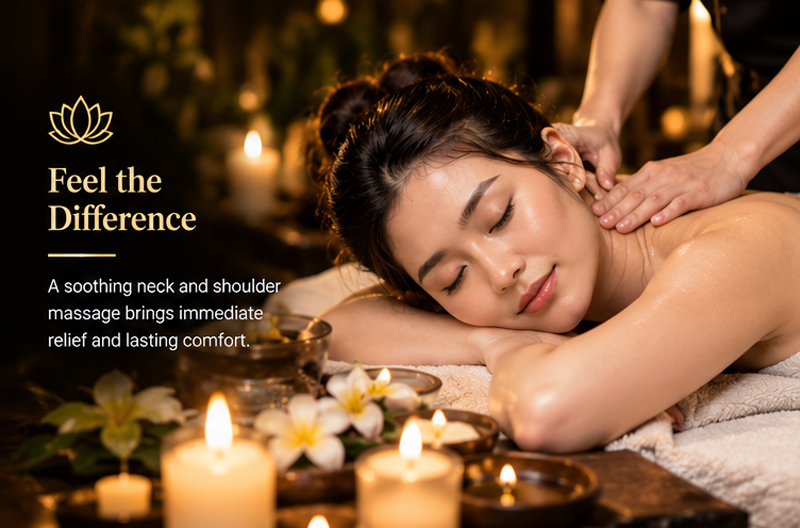
1. Why Stress Causes Neck and Shoulder Tension
Stress affects both your mind and body. Work pressure, family responsibilities, and busy schedules can increase muscle tension, especially around the neck and shoulders.
Long Hours at a Desk
Sitting at a computer for extended periods can lead to poor posture, muscle fatigue, and discomfort in the neck, shoulders, and upper back.
Work-Related Stress
Deadlines and daily responsibilities may cause you to unconsciously tense your shoulders, tighten your jaw, or hold your breath, contributing to ongoing muscle tightness.
Excessive Screen Time
Looking down at phones or sitting in one position for too long can strain the neck and shoulders. Taking regular movement breaks, improving posture, managing stress, and receiving massage may help relieve muscle discomfort and promote relaxation.
2. Six Benefits of Neck and Shoulder Massage for Stress Relief
A neck and shoulder massage can be more than a pleasant break from a busy schedule. For many people, it provides an opportunity to address muscle tension while creating dedicated time for relaxation.
The benefits vary from person to person, depending on the cause of the discomfort, the massage techniques used, and individual health conditions.
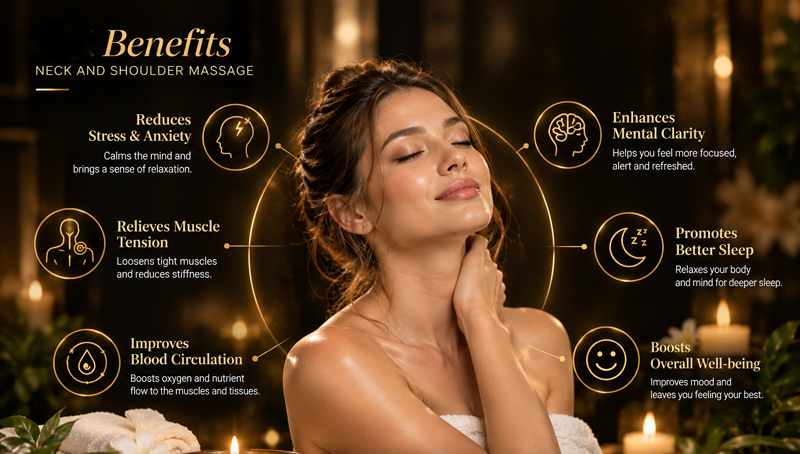
2.1. Helps Relieve Tight Neck and Shoulder Muscles
Long hours at a desk, poor posture, and daily stress can leave your neck and shoulders feeling stiff and heavy. Gentle massage techniques may help relax tight muscles and temporarily ease discomfort. If pain persists or worsens, seek medical advice rather than relying on massage alone.
2.2. Encourages Relaxation After a Stressful Day
Massage provides a quiet break from work, notifications, and daily responsibilities. A calm environment and gentle touch may help reduce feelings of stress and promote relaxation. For lasting stress management, combine massage with adequate sleep, physical activity, and healthy daily habits.
2.3. May Support a More Comfortable Bedtime Routine
Neck and shoulder tension can make it difficult to settle comfortably at bedtime. A gentle massage may help ease muscle tightness and encourage relaxation before sleep. Maintaining a consistent sleep schedule and a comfortable sleeping environment can also support better rest.
2.4. Improves Comfort During Everyday Activities
Muscle tension may cause discomfort when driving, working, using a phone, or performing household tasks. Massage may temporarily ease muscle-related discomfort and help you feel more comfortable. Avoid excessive pressure, and seek medical advice for severe pain, numbness, or weakness.
2.5. Creates Time for Self-Care
Busy schedules often leave little time for personal relaxation. A neck and shoulder massage offers an opportunity to step away from daily demands and focus on your well-being. Combined with regular breaks, physical movement, and healthy stress-management habits, it can become part of a balanced self-care routine.
2.6. Helps You Feel More Refreshed
Neck and shoulder discomfort can make everyday tasks less comfortable. By temporarily easing muscle tension, massage may help you feel more relaxed when returning to your routine. Regular movement, ergonomic adjustments, and appropriate medical care can further support lasting comfort.
3. Who Can Benefit From a Neck and Shoulder Massage?
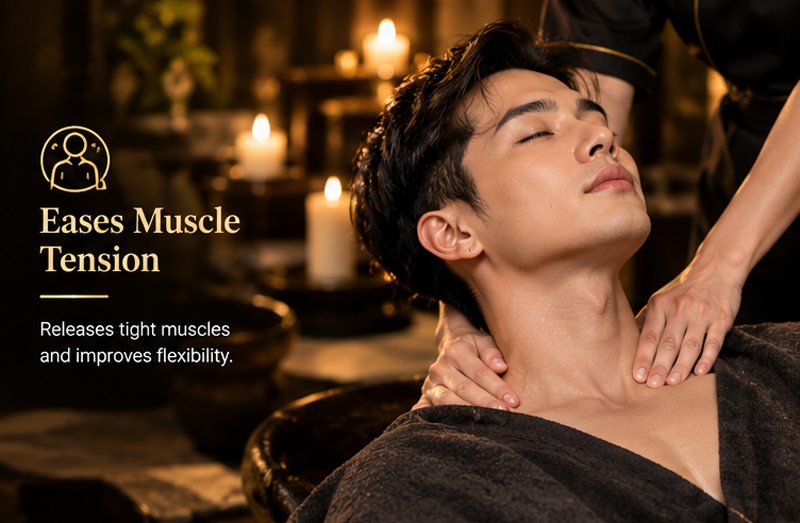
Neck and shoulder massage may be worth considering if you are looking for a relaxing experience and temporary relief from mild muscle tension.
Common reasons people explore this type of massage include:
Office workers and remote employees: Spending long hours at a computer can contribute to neck and shoulder discomfort, especially when movement breaks are limited.
People with demanding schedules: If your days are filled with meetings, deadlines, and responsibilities, massage can provide dedicated time to slow down and relax.
Frequent drivers: Long periods behind the wheel may leave your upper back and shoulders feeling tight or fatigued.
People who spend significant time on smartphones: Repeatedly looking down at a screen can contribute to uncomfortable neck positions and muscle fatigue.
Anyone looking for personal wellness time: You do not need to wait until you feel exhausted to make relaxation part of your routine.
However, massage is not appropriate for every condition. People with recent injuries, severe or unexplained pain, certain spinal conditions, significant osteoporosis, or bleeding disorders should consult a healthcare professional before receiving massage.
Seek prompt medical attention for concerning symptoms such as new arm or hand weakness, significant numbness, severe pain following an injury, or neck pain accompanied by other serious symptoms.
4. What to Expect During a Professional Neck and Shoulder Massage
If you have never booked a neck and shoulder massage, you may wonder what happens during a session and whether the pressure will be too intense.
Knowing what to expect can help you feel more comfortable before your appointment.
Step 1: Discuss Your Needs and Comfort Level
A professional massage experience should begin with a conversation about your preferences and any relevant health concerns.
You can explain whether your shoulders feel tight after work, whether you spend long hours at a desk, and whether you prefer lighter or firmer pressure.
Be sure to mention any injuries, medical conditions, or symptoms that may affect the suitability of massage.
Step 2: Choose Comfortable Pressure
Massage pressure should be adjusted to your comfort level.
Some people prefer gentle, relaxing movements, while others enjoy more focused work on the surrounding muscles.
You should never feel that you must tolerate significant pain to receive an effective massage. Communicate with your therapist if the pressure feels uncomfortable or if you want an adjustment.
Step 3: Relax the Neck, Shoulders, and Upper Back
Depending on the service you book, the session may include gentle kneading, gliding movements, and other massage techniques applied to the neck, shoulders, and upper back.
The techniques should be appropriate for your needs and performed without forceful neck manipulation.
A quality massage experience prioritizes your comfort, clear communication, and safe practices throughout the session.
Step 4: Check How You Feel Afterward
After the session, take a moment to notice how your body feels.
You may experience temporary relief from muscle tightness or simply appreciate having had time to relax. Individual responses vary, and one session may not resolve recurring discomfort.
If you notice worsening pain, numbness, dizziness, or other unusual symptoms, stop further massage and seek appropriate medical advice.
5. How to Keep Neck and Shoulder Tension From Coming Back
Massage can be a helpful part of a relaxation routine, but recurring neck and shoulder tension often requires attention to everyday habits as well.
Here are several practical steps you can take.
Adjust Your Workstation
Position your computer screen at a comfortable height, keep your shoulders relaxed, and avoid repeatedly leaning your head forward toward the screen.
Your chair, keyboard, and desk should allow you to work without unnecessary strain.
Take Regular Movement Breaks
Try not to remain in the same position for hours at a time.
Stand up, walk around, change positions, or perform gentle movements throughout the day. Small, consistent breaks may help reduce the strain associated with prolonged sitting.
Pay Attention to Your Stress Levels
If you notice that your shoulders become tense whenever work gets stressful, take a moment to relax your shoulders and breathe comfortably.
You may also benefit from setting clearer work boundaries, organizing your schedule, spending time outdoors, or engaging in activities you enjoy.
Prioritize Sleep and Recovery
Adequate sleep supports overall physical and mental well-being. Maintaining a consistent bedtime and creating a relaxing evening routine may help you recover from daily demands.
Choose Massage Based on Your Needs
If massage helps you relax and feel more comfortable, you may choose to include it in your wellness routine.
The right frequency depends on your preferences, budget, health, and response to treatment. There is no universal schedule that everyone needs to follow.
If neck and shoulder discomfort keeps returning, persists for an extended period, or becomes more severe, consult a healthcare professional to determine the underlying cause.
6. Make Time for Yourself With a Neck and Shoulder Massage
Life can get busy quickly. Between professional responsibilities, family commitments, and everyday tasks, it is easy to ignore the signs that your body needs a break.
If you regularly experience tight shoulders, a stiff neck, or physical tension after a demanding day, consider taking a closer look at your daily habits and making relaxation a more intentional part of your routine.
A professional neck and shoulder massage may help relieve muscle-related discomfort, encourage relaxation, and provide valuable time away from everyday stress.
Combined with healthy movement habits, ergonomic adjustments, adequate sleep, and appropriate medical care when needed, massage can be one part of a balanced approach to personal wellness.
You deserve time to slow down, recharge, and care for yourself.
If you are ready to take a break from your busy schedule, consider finding a massage experience that fits your needs, preferences, and comfort level.
Experience Relaxation at ANGEL SPA — The Best Massage Destination on Earth®
At ANGEL SPA — The Best Massage Destination on Earth®, we believe that taking time for yourself is an important part of a balanced lifestyle. When daily responsibilities leave you feeling physically tired and mentally overwhelmed, a relaxing massage can provide an opportunity to step away from the demands of everyday life and focus on your well-being.

Whether you spend long hours at a desk, manage a demanding schedule, or simply want to enjoy some personal downtime, our goal is to help you discover a relaxing massage experience that suits your preferences.
If you are exploring a neck and shoulder massage in Orange County, CA, ANGEL SPA offers two convenient locations to consider when planning your visit.
Visit ANGEL SPA at one of our locations:
ANGEL SPA — Stanton
12860 Beach Blvd J
Stanton, CA 90680
ANGEL SPA — Fountain Valley
16125 Harbor Blvd
Fountain Valley, CA 92708
24/7 Hotline: 714.897.7779
Email: Angel@franchisespa.com
Whether you are looking for a relaxing break after work or time to unwind during a busy week, contact ANGEL SPA to learn more about our services, available appointment times, and pricing.
Give yourself permission to slow down, relax, and make your well-being a priority.
ANGEL SPA — The Best Massage Destination on Earth®
